












































Introduction
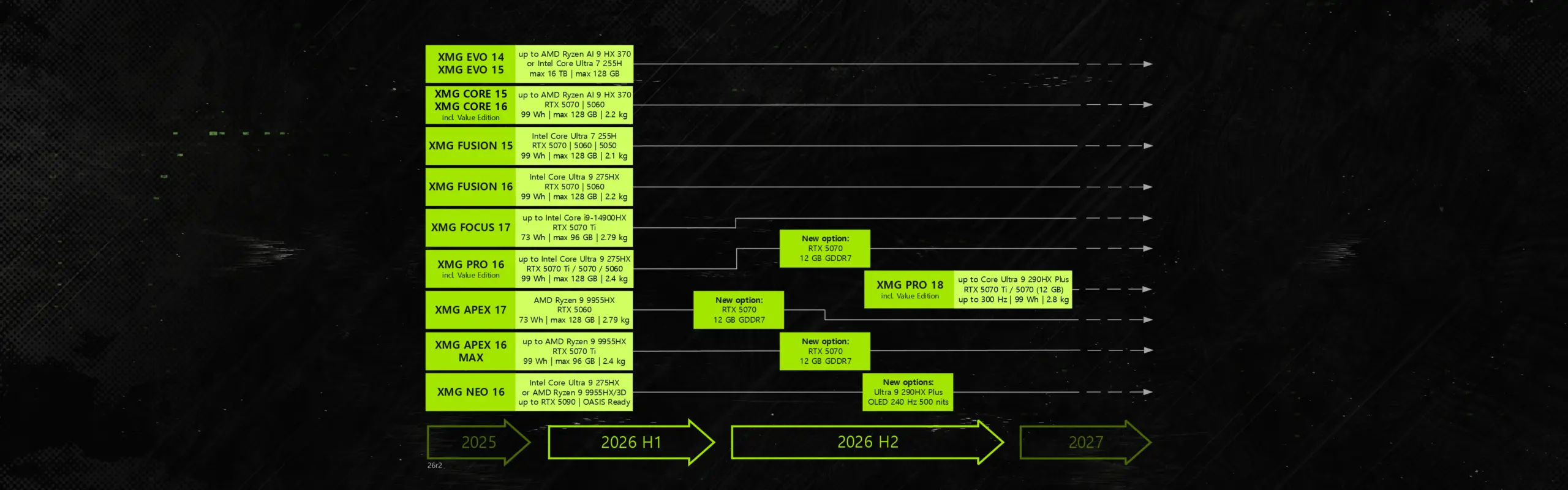
With this XMG roadmap update, we are providing an overview of the planned availability of our current XMG and SCHENKER laptops later in 2026. The most significant development concerns the NVIDIA GeForce RTX 5070 Laptop GPU with 12 GB of video memory, which we initially plan to offer in XMG APEX 17 and later also in XMG APEX 16 MAX.
Summary:
- XMG APEX 17 is set to receive an additional GPU option featuring the RTX 5070 and 12 GB of video memory during May.
- XMG APEX 16 MAX is also expected to follow with this new RTX 5070 variant at a later date, but only in combination with the IPS display.
- XMG NEO 16 with Intel is planned to receive a small upgrade with Intel Core Ultra 9 290HX Plus. This is a minor refresh, not a new platform generation.
- As things stand, the XMG CORE, FUSION, FOCUS, PRO and EVO series will continue unchanged.
- The new SCHENKER CONNECT 15 is positioned as a new option alongside the existing SCHENKER WORK series.
- Prices remain under pressure due to RAM, SSD, video memory and electronic components.
All of the following information is subject to possible changes regarding development, availability, delivery times and procurement costs. We will only specify concrete prices for new configurations in the separate product announcements.
Overview: XMG Roadmap and SCHENKER Roadmap 2026
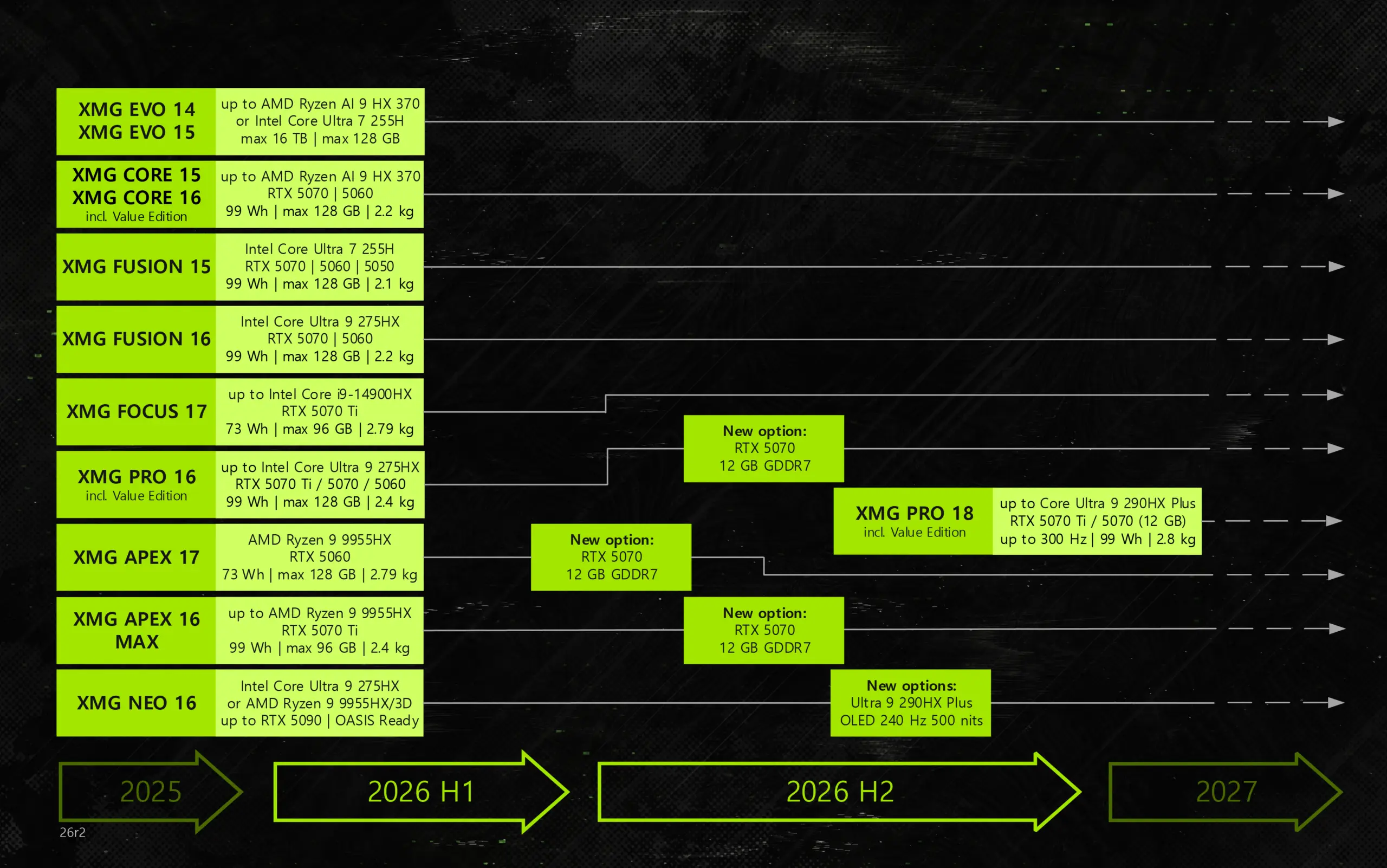
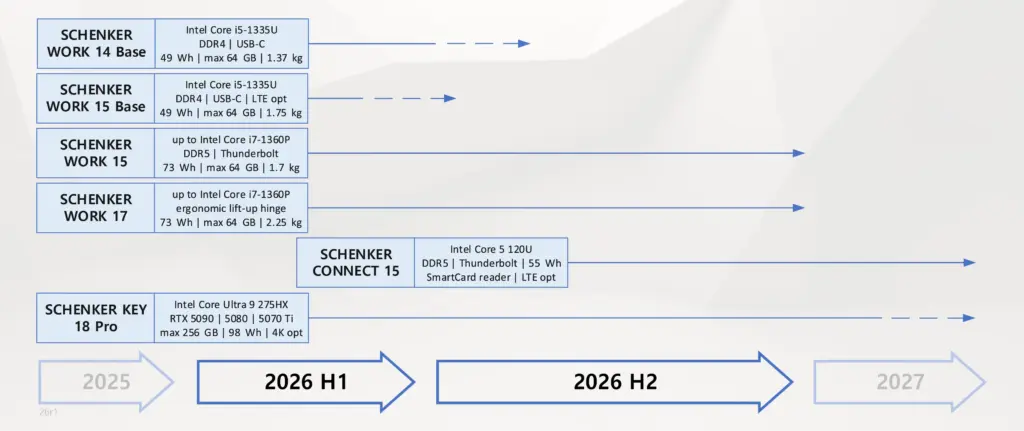
The left-hand edge of each block indicates the planned availability. Dates are subject to change, as delays for technical or logistical reasons are possible at any time at short notice.
NVIDIA GeForce RTX 5070 with 12 GB
Until now, laptop GPUs in the RTX 50 series with more than 8 GB of video memory were only available from NVIDIA GeForce RTX 5070 Ti Laptop GPU and above.
With the new variant of the RTX 5070 Laptop GPU featuring 12 GB of video memory, NVIDIA has now introduced an intermediate step between the RTX 5070 with 8 GB and the RTX 5070 Ti with 12 GB. This is made possible by GDDR7 chips with higher memory density (more GB per IC). As a result, the memory capacity has increased by a factor of 1.5 while retaining the same board layout and number of memory chips.
Under normal market conditions, this new option would fill an obvious gap in terms of both performance and price. In the current situation, however, the picture is more complex: due to rising prices for video memory, RTX 5070 with 12 GB will come very close to the price level of the existing RTX 5070 Ti. At the same time, it is already foreseeable that RTX 5070 Ti configurations will also become more expensive in the future once older stock purchased under earlier conditions has been sold off.
For XMG, we are initially planning the 12 GB RTX 5070 in two models:
- XMG APEX 17
- XMG APEX 16 MAX
For other current models featuring RTX 5070, particularly the XMG CORE and XMG FUSION series and the Value Edition of XMG PRO 16, we do not plan any upgrades to the 12 GB variant at this time.
The reason for this is the currently suboptimal availability of the required high-density VRAM chips. Given the generally uncertain supply situation, we do not want to spread the available stock across too many model variants. Instead, we will deploy this new SKU specifically into only a few configurations so that we can ensure reliable supply for these configurations.
XMG APEX 17: RTX 5070 with 12 GB coming soon
The XMG APEX 17 is currently available with an AMD Ryzen 9 9955HX, NVIDIA GeForce RTX 5060, 73 Wh battery, up to 128 GB RAM and a weight of 2.79 kg. With the new RTX 5070 option, the 17.3-inch model gains a significant GPU upgrade in both performance and memory.
The official launch of the new configuration is planned for later in May, at which point we will announce the price and expected delivery time. Apart from the new GPU option, we do not plan any further configuration changes or component upgrades on XMG APEX 17 this year.
Thus, the XMG APEX 17 continues to be a powerful model for users seeking a large display, a powerful CPU and an lower-priced GPU configuration, without moving up to the higher-end RTX 5070 Ti, RTX 5080 or RTX 5090 models.
XMG APEX 16 MAX: RTX 5070 with 12 GB to follow later, but without Mini-LED
We are also planning a configuration with the RTX 5070 12 GB in the XMG APEX 16 MAX, although availability will be significantly later than in the XMG APEX 17.
In XMG APEX 16 MAX, the new GPU option will be available only with the IPS display. The Mini-LED option for the XMG APEX 16 MAX will remain reserved for the RTX 5070 Ti configuration. Again, the core idea is to keep the number of variants relatively small, given the potentially limited availability of the high-density VRAM ICs.
In terms of price, the new configuration with RTX 5070 12 GB is expected to be roughly on a par with the RTX 5070 Ti in the current XMG APEX 16 MAX (with IPS). This is due to the cost structure for new video memory: the current RTX 5070 Ti configurations, which are still comparatively affordable at present, are based on older purchasing prices. Once these stocks are sold out, increased procurement costs will make the price of the RTX 5070 Ti go up in the not-too-distant future.
XMG NEO 16: Intel Core Ultra 9 290HX Plus under development
For XMG NEO 16, we are planning an additional CPU option featuring the Intel Core Ultra 9 290HX Plus later this year. This is a refresh of the current Arrow Lake HX platform.
Unlike with the 200 Plus series in the desktop segment, Intel has made no changes to the number of cores, threads or amount of cache in this laptop CPU. In XMG NEO, this refresh is therefore not a technological leap – but merely a speed bump. Significant gains in gaming performance are only to be expected in games and applications that enable the new Intel Binary Optimization Tool. We will certainly support this technology – however, the performance differences communicated by Intel at launch are based on a combination with desktop GPUs and 1080p resolutions only, and will be correspondingly lower with laptop GPUs and native screen resolutions.
As soon as the Intel Core Ultra 9 290HX Plus is available in XMG NEO later this year, we will make a separate announcement with full pricing and availability information.
XMG EVO series: AMD Ryzen AI 400 under evaluation
AMD has unveiled the Ryzen AI 400 series, a refresh of the previous Ryzen AI 300 generation – codenamed “Gorgon Point”. This is a moderate speed bump without any fundamental technical changes to the number of cores, cache or graphics architecture. However, AMD is charging higher prices for this refresh than for its predecessor, known as “Strix Point”.
We are evaluating whether individual CPUs from this series can be meaningfully integrated into the XMG EVO series. However, no decision has yet been made on this, which is why a potential Ryzen AI 400 upgrade is not yet reflected in the current timeline.
The current XMG EVO series will therefore continue unchanged for the time being with the existing AMD and Intel options.
Other XMG models: no changes in the short term
No fundamental changes are currently planned for the remaining XMG models. Ongoing models include:
- XMG CORE 15 and XMG CORE 16
- XMG FUSION 15 and XMG FUSION 16
- XMG FOCUS 17
- XMG PRO 16, including the Value Edition
- XMG NEO 16 with AMD
As shown in the timeline, these models will remain largely unchanged for the rest of the year – however, further adjustments (increases) in pricing (both base and upgrade prices) seem unavoidable given current purchasing price forecasts.
This also affects the “Value Editions” of XMG CORE 16 and XMG PRO 16. These sub-variants might see themselves being phased out in the coming months, as the originally advertised discounts compared to the respective “main models” (XMG CORE 16 and XMG PRO 16) can no longer be maintained given current component prices. In other words: these variants will remain while stocks last.
18-inch model in the pipeline for XMG
Apart from the models visible on the timeline, we are continuing to work on further projects. These include the new XMG PRO 18, which is planned for the second half of 2026.
However, the exact specifications and availability of this model are not yet concrete enough to officially include it in the timeline.
However, we would like to clarify already: it is not a larger companion model to the XMG NEO 16, but rather an addition to the upper mid-range to high-end segment, which will be more comparable to the XMG PRO 16.
The maximum GPU configuration of this 18-inch model is expected to include 12 GB of video memory. Further details are scheduled to be announced in June at Computex 2026.
SCHENKER WORK and SCHENKER CONNECT
Some models in the SCHENKER WORK series will remain unchanged until the end of the year; only the “Base” variants will eventually cease production in their current configuration – so they might be out of stock in a few months. We are currently reviewing possible successor options.
New in our portfolio is the SCHENKER CONNECT 15. This 15.6-inch business laptop combines an Intel Core i5, Thunderbolt, upgradeable DDR5 RAM and a removable battery with a smartcard reader, fingerprint reader and optional LTE. It is therefore aimed at users seeking a practical everyday companion with modern connectivity and additional security features. See also this deep dive for more information.
SCHENKER ELEMENT 16
The SCHENKER ELEMENT 16 is not yet included in the timeline. The model is still under development. At this stage, we are unable to provide any definitive information regarding release dates, specifications or availability.
SCHENKER KEY 18 Pro
The SCHENKER KEY 18 Pro continues as before. The model remains the current 18-inch workstation with the Intel Core Ultra 9 275HX, graphics cards up to NVIDIA GeForce RTX 5090, four DDR5 RAM slots, a 98 Wh battery and an optional 4K display.
For workstation and business models, we place particular emphasis on the consistent availability of already validated platforms. Therefore, it is not yet clear whether there will be a CPU refresh to the new Intel Core Ultra 200 “Plus” in KEY 18 Pro.
Price trends: RAM, SSDs, VRAM and other components remain tight
General price trends remain a key issue. We continue to see severely elevated price levels for memory. SSDs are also seeing a significant uptick in pricing on the purchasing side.
Our retail prices are always based on actual purchase prices. This means that as long as older stock is available from previous batches, individual configurations or upgrade options may remain stable for the time being. As soon as reorders are only possible at higher purchase prices, these higher costs will be reflected in new configurations.
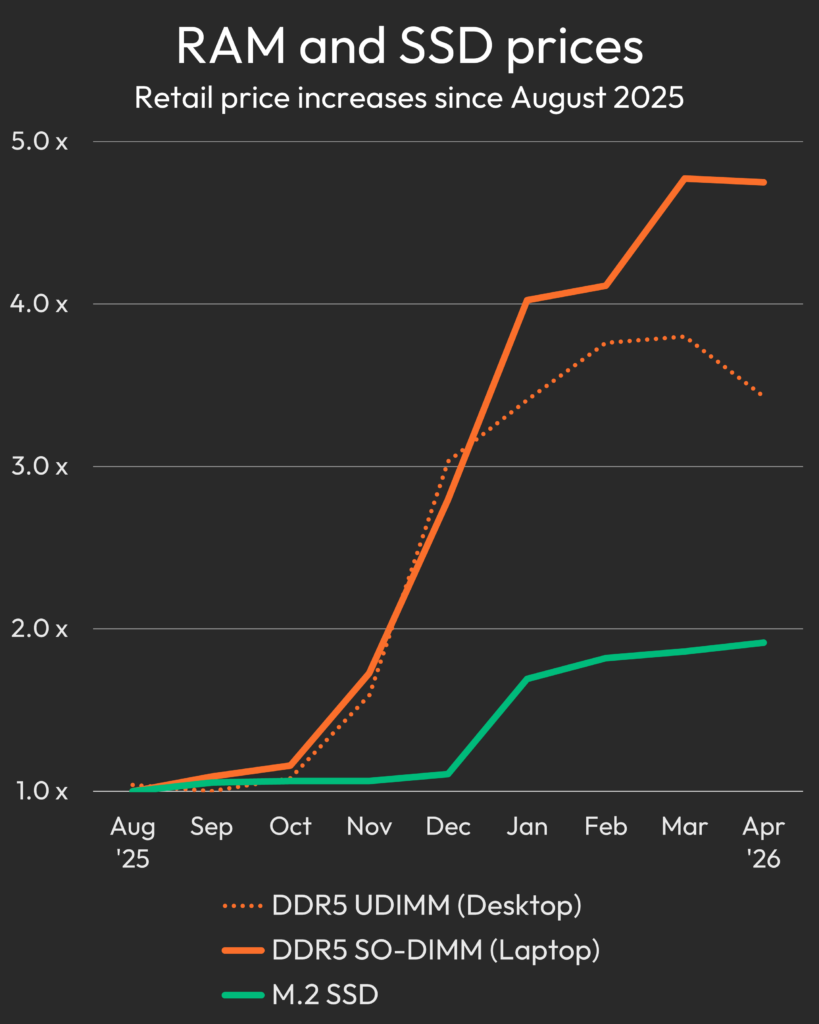
This chart shows the relative price trends in the components market based on retail prices. The lowest price since August 2025 is used as reference value (1x). The vertical scale shows the price increase relative to the reference. As shown, the price of laptop RAM has increase by a factor of almost 5x since August. You can compare this data with price trends on Geizhals (price comparison site), examples: UDIMM, SO-DIMM, M.2 SSD.
This affects not only plug-in RAM and SSDs. GDDR video memory is also becoming much more expensive. Unlike with SO-DIMM modules or M.2 SSDs, the trend in VRAM pricing is less transparent to end customers because video memory prices cannot be tracked via DIY retail price listings.
In addition, the costs of other basic components in electronics manufacturing are also on the rise, including printed circuit board materials, power management ICs and such commodities. These price upticks have (so far) been less severe than with memory and storage, but they are nevertheless having a measurable impact on our overall procurement costs.
Please note that price changes may not affect all vendors concurrently. For brands that have built sufficient inventory at earlier purchase prices, their individual products may stay affordable for longer. Our just-in-time production responds more dynamically to our latest procurement costs. This applies in both directions: when costs rise, we must adapt more quickly; however, when costs fall, we have also been able to bring down upgrade prices relatively quickly in the past.
We have compiled further information in this forum post (in German).
XMG NOMAD: compact Micro-ATX PC with high performance
There are also several relevant new additions to the XMG desktop portfolio.
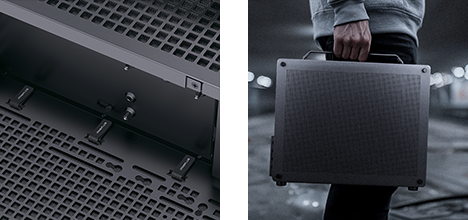
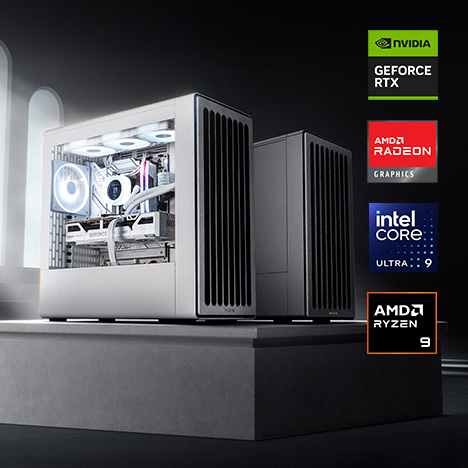
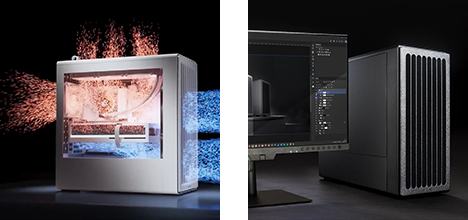
The XMG NOMAD is our most portable desktop PC build to date. The system is based on the Jonsbo Jonsplus Z20 and combines a volume of around 20 litres with support for full-size Micro-ATX motherboards, high-performance Intel and AMD desktop CPUs, and graphics cards up to the NVIDIA GeForce RTX 5090.
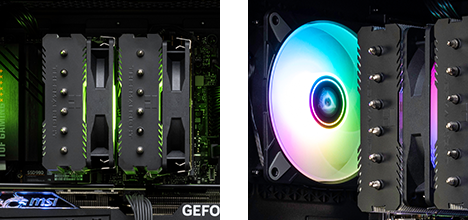
The chassis measures only 370 x 186 x 295 mm while, at the same time, offering enough space for high-performance components and flexible CPU cooling. Depending on the configuration, you can choose between single or dual-tower air coolers and a 240 mm AIO liquid cooler.
For transport, the XMG NOMAD features an additional carrying handle, which we can also pre-assemble on request. Mesh panels on the sides, front and bottom, as well as dust filters fitted all round, support efficient airflow.
The XMG NOMAD is available in both black and white. A glass side panel is also available as an option for both variants.
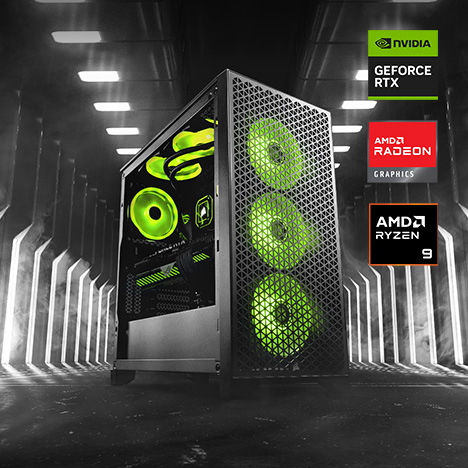
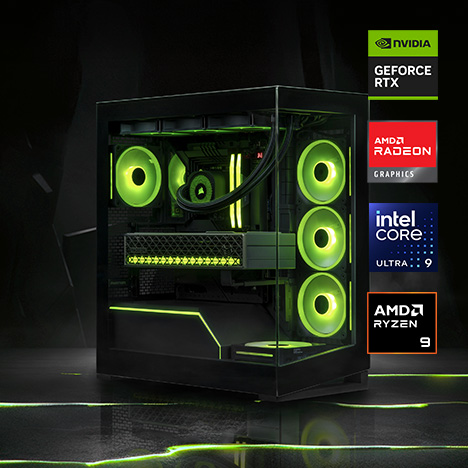
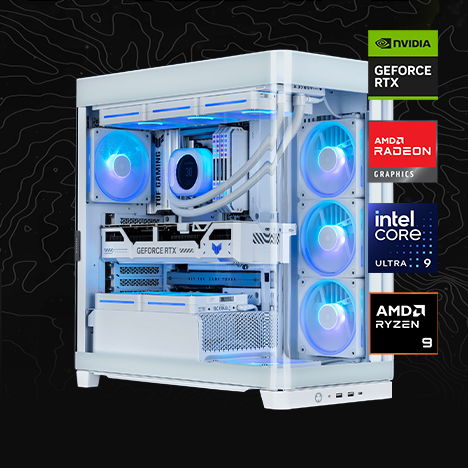
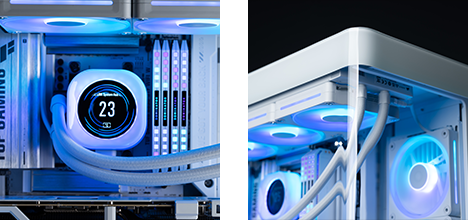
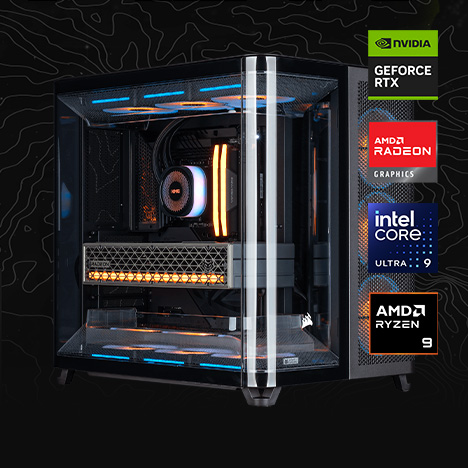
XMG UNIFY C1: Panoramic case based on the Corsair FRAME 4500X
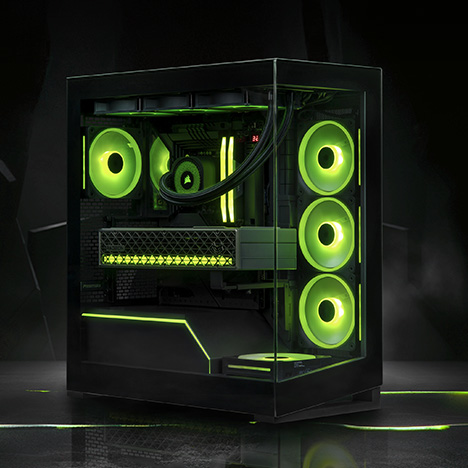
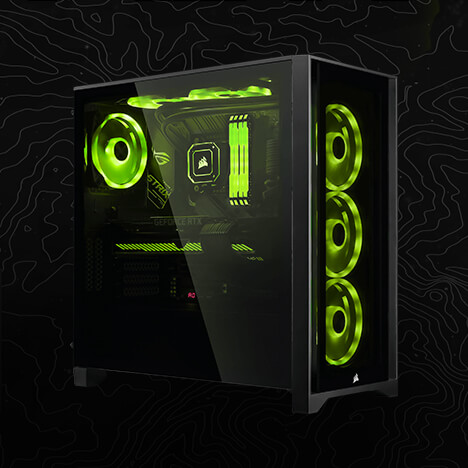
Another new addition is the XMG UNIFY C1. This system, co-designed with Corsair, is also available in black and white, with both Intel and AMD platforms.
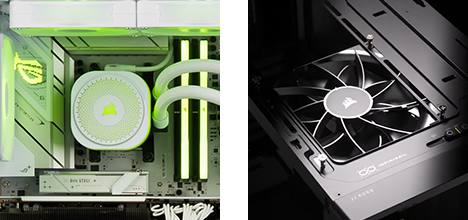
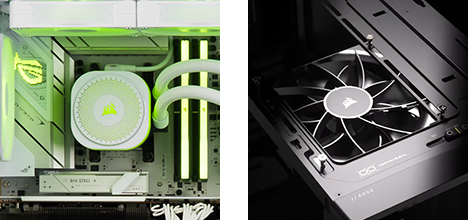
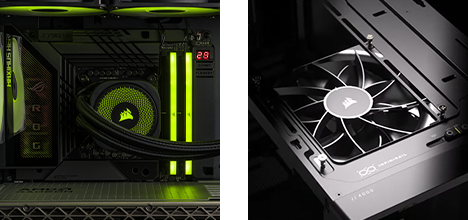
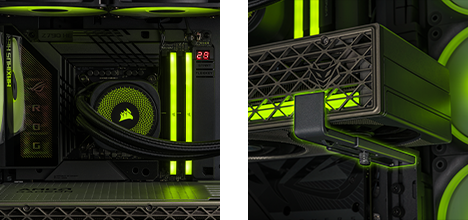
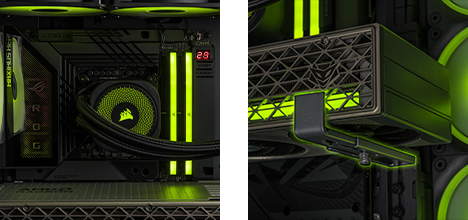
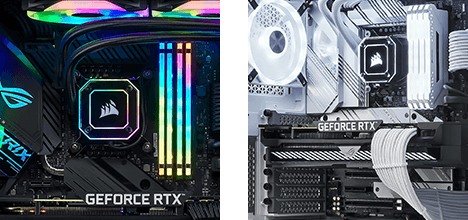
The chassis combines a continuous, curved glass panel on the front and side with a modular design. It also features Corsair’s InfiniRail fan mounting system, support for large 360 mm radiators, a GPU support bracket and pre-installed reverse-rotation fans.
With the XMG UNIFY C1, we are offering a freely configurable gaming PC with a focus on excellent aesthetics, good component accessibility and a well-structured interior. As is customary with our desktop PCs, we pay particular attention to optimised cooling, neat cable management and sensible platform combinations during implementation.
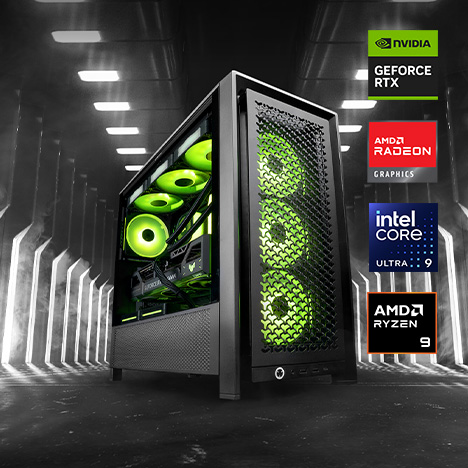
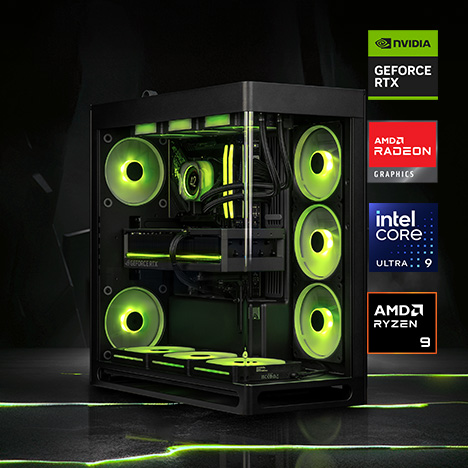
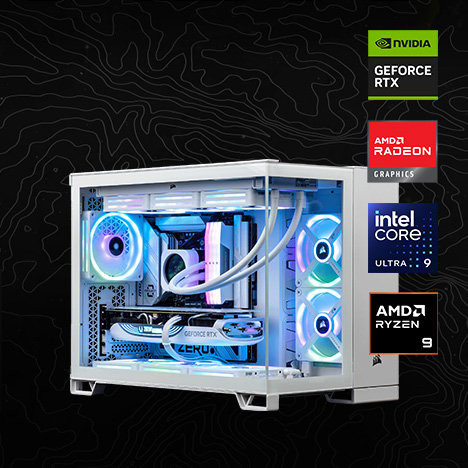
XMG UNIFY C3: Triple-chamber concept based on the Corsair AIR 5400
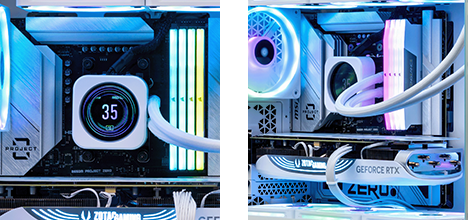
The XMG UNIFY C3, again in partnership with Corsair, is also available in two colours and with Intel and AMD; it impresses with absolutely unobstructed airflow, an organised layout and a particularly brilliant presentation of the components.
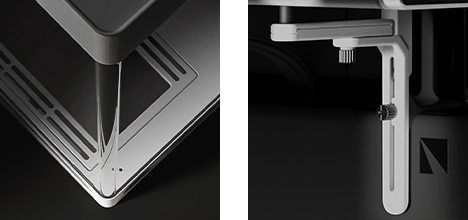
The Corsair AIR 5400 features a triple-chamber design: a separate cooling zone for the CPU, a central chamber with airflow channelling for the GPU and motherboard, and a third zone for the power supply, storage drives and cables. Added to this are RapidRoute 2.0 for cable management and the support for large 360 mm radiators already mentioned in the C1, reverse-rotation fans, the GPU support bracket and an equally elegant, curved front panel.
The C3 is essentially the same as the C1, only larger and even more spacious and beautiful – when configured with identical key components, the two systems are also very close in price.
FAQ: Frequently Asked Questions
What product innovations are expected for 2027?
We are not yet able to make any concrete statements regarding new platforms for 2027 – on the one hand due to NDAs, on the other hand because, given the current market situation, it is difficult to assess whether there will be any further delays in Intel, AMD and NVIDIA’s roadmap plans.
We would not expect any comprehensive 2027 timeline until CES in January 2027.
How will prices develop in the long term?
A reliable long-term price forecast is not currently possible. Procurement costs for RAM, SSDs and video memory remain high, and other electronic components are also affected.
Why is the 12 GB RTX 5070 not available in any other models?
The new 12 GB RTX 5070 variant requires higher-density VRAM chips. These are currently less readily available than the existing memory modules. That is why we are initially focusing the new option solely on the XMG APEX 17 and later on the XMG APEX 16 MAX.
Are there plans for further models with support for XMG OASIS water cooling?
Not at present. According to current plans, the 18-inch model currently in development is positioned more in the upper mid-range segment and will not support XMG OASIS. In the long term, however, we still plan to maintain support for XMG OASIS – though updates are not expected until 2027.
Any new models with OLED displays?
At present, there are no plans for further XMG models with OLED displays in 2026. We continue to review OLED panels regularly, but do not see any further concrete projects this year that are advanced enough to be included in the roadmap.
The main reasons for this are the limited availability of suitable panels, panel vendor’s minimum order quantities and platform-specific validation issues. With OLED in particular, display connectivity, firmware, power-saving mechanisms and the interaction between the iGPU, dGPU and MUX logic often requires different SKUs and variations between Intel, AMD and NVIDIA’s platforms. Any potential panel must be capable of covering enough platform variety to ensure that the effort involved and availability are in a reasonable balance.
However, OLED remains available at XMG: the XMG FUSION 16 (M25) continues to be offered with an optional 16-inch OLED display and remains our current recommendation for users who place particular value on black levels, vivid colour reproduction and high pixel density.
In XMG PRO 16, XMG APEX 16 MAX and XMG NEO 16, we continue to rely on the optional Mini-LED panel which performs well in both gaming and work, as well as for HDR content, with up to 1000 nits of brightness, a matte finish, 300 Hz and local dimming.
Are there still any plans for a laptop with AMD Strix Halo?
We are currently not planning any further models with the AMD Ryzen AI Max+ 395, codenamed “Strix Halo”. The platform remains technically interesting, but we are no longer actively working on any related projects.
A Strix Halo model makes sense for us primarily if it can be offered with a very large amount of RAM. Below 128 GB, the platform would lose part of its key unique selling point. However, due to the sharp rise in RAM prices and the supply situation that remains difficult to plan for, it would currently be difficult to position such a model.
Furthermore, the use cases have evolved. For pure gaming, AMD Strix Halo was never particularly competitive from a price-performance perspective compared to a traditional laptop with a dedicated NVIDIA GPU. While large “unified memory” remains interesting for local AI applications, many open-source AI models are becoming more and more efficient. Smaller and more specialised models can now also be used effectively with a significantly lower amount of VRAM. In this context, systems with NVIDIA GeForce RTX may once again be the better choice, as they offer significantly higher inference speeds for suitable model sizes due to their high memory bandwidth. Software and driver compatibility with NVIDIA CUDA also tends to be a tad smoother.
We remain in contact with partners regarding future opportunities in this product segment – however, we do not foresee any Strix Halo models launching this year.
Intel’s powerful Panther Lake variants with 12 Xe cores are also not a genuine alternative in this segment. Similar to Strix Halo, Panther Lake 12Xe uses a one-off board design without support for upgradeable SO-DIMM modules. However, memory expansion with Panther Lake is limited to 64 GB, as Intel provides only half as many IC positions as AMD. With high-density DRAM, 96 GB would theoretically also be possible. However, the specialised ICs required would drive up the cost of such a platform so significantly that it would hardly be economically viable in this segment.
Will the AMD Ryzen X3D2 also be available in the XMG NEO?
In the desktop sector, AMD has unveiled the Ryzen 9 9950X3D2 “Dual Edition”, a highly specialised CPU featuring 3D V-Cache on both CCDs. This is primarily aimed at workstation applications that benefit significantly from large cache.
We currently have no information to suggest that AMD is preparing a corresponding mobile CPU for the Fire Range HX series. In the notebook sector, therefore, the Ryzen 9 9955HX and Ryzen 9 9955HX3D remain the flagship models of the Fire Range HX series, as far as we are aware. In general, we do not expect any new AMD Ryzen CPUs to be featured in the XMG APEX or XMG NEO 16 this year.
(We plan to adopt the X3D2 in some of our XMG and SCHENKER desktop PCs in the near future.)
Further information
- XMG laptops on bestware
- SCHENKER laptops on bestware
- Desktop PCs on bestware
- Newsletter sign-up on bestware
- Previous roadmap updates
- How do the various laptop series from XMG and SCHENKER differ?
- Which XMG or SCHENKER laptops are recommended for my intended use?